
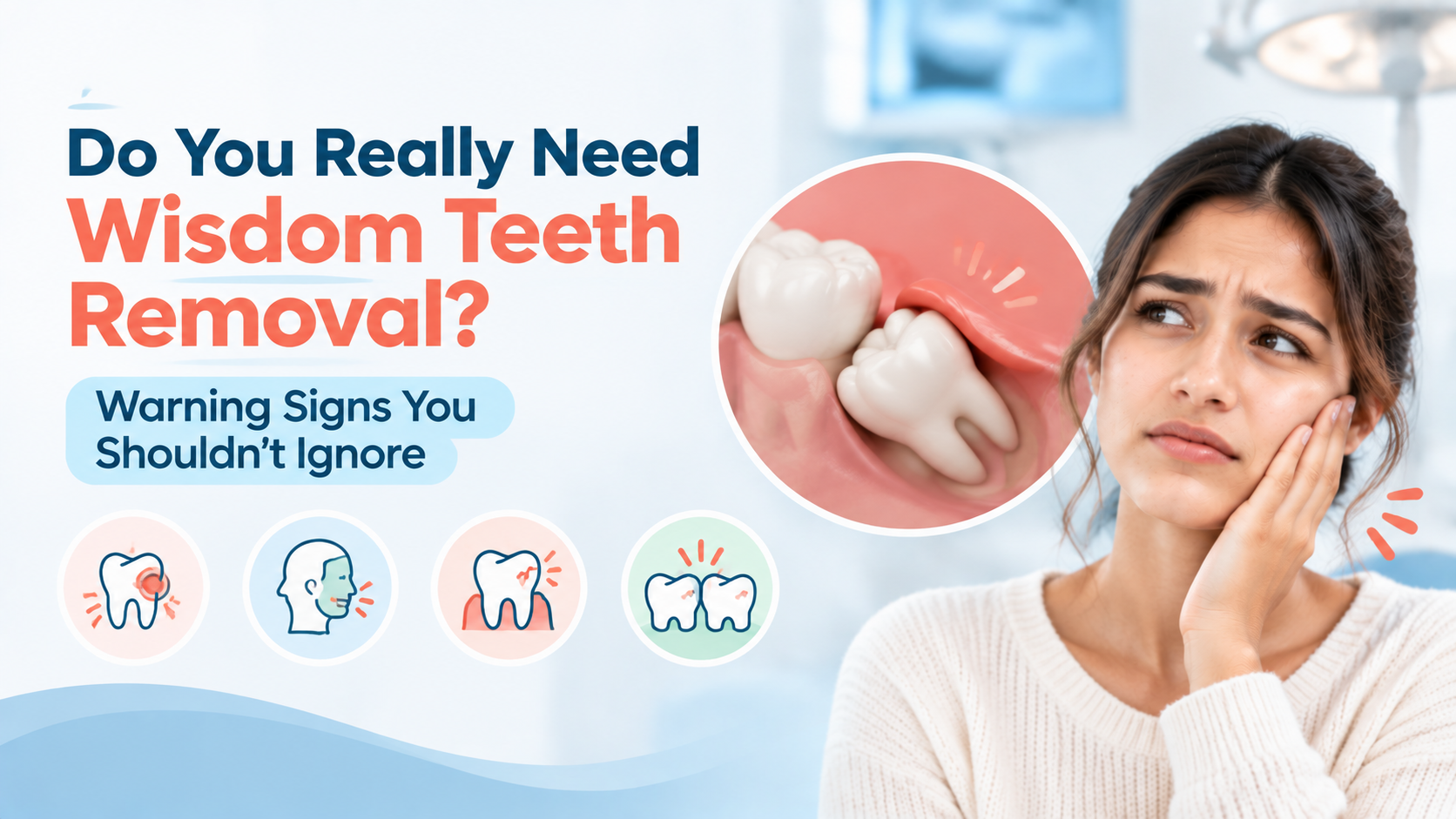
Wisdom teeth are the last set of molars that typically appear in your late teens or early twenties. While some people never experience problems with them, for many, these third molars can cause discomfort, misalignment, or even infection. So how do you know if you truly need them removed?
In this blog, we’ll help you understand what wisdom teeth are, when they become a problem, and the 7 major signs that may indicate it’s time for a wisdom tooth extraction.
What Are Wisdom Teeth?
Wisdom teeth are the third set of molars located at the back of your mouth—two on the top and two on the bottom. They usually emerge between the ages of 17 and 25, a stage when individuals are considered to have gained some “wisdom”—hence the name.
However, as our jaws have become smaller over time due to changes in diet and evolution, there’s often not enough room in the mouth to accommodate these additional teeth. This can result in complications like impaction (when a tooth fails to fully erupt), crowding, or infection.
Do All Wisdom Teeth Need to Be Removed?
Not necessarily.
Some people have healthy, properly aligned wisdom teeth that don’t cause any trouble. If your dentist confirms that your wisdom teeth are fully erupted, functional, and easy to clean, you may never need them removed.
However, many dental professionals recommend proactive removal in the late teens or early twenties—especially if the teeth are impacted, partially erupted, or causing crowding. The key is early detection through routine dental exams and X-rays, even if you aren’t experiencing pain.
Top 7 Signs You May Need Wisdom Teeth Removal
Knowing when to seek professional help can save you from long-term dental issues. Here are seven signs that strongly suggest it might be time for a wisdom tooth removal (extraction):
1. Persistent Pain or Discomfort at the Back of the Mouth
Pain at the back of your mouth—especially around the gums or jawline—might stem from a wisdom tooth pushing against nearby molars or from inflammation due to partial eruption. Schedule a dental check-up if the pain is constant or recurring.
2. Swollen or Bleeding Gums
Partially erupted wisdom teeth can create a flap of gum tissue that traps food and bacteria, leading to swelling, tenderness, and bleeding. This condition, called pericoronitis, requires prompt dental care.
3. Frequent Headaches or Jaw Pain
Impacted wisdom teeth can press on nearby nerves or teeth, leading to jaw stiffness or even headaches that resemble TMJ disorders. These symptoms shouldn’t be ignored.
4. Bad Breath or Unpleasant Taste
Wisdom teeth that are hard to clean may harbor bacteria and debris, causing bad breath or a foul taste despite regular brushing. This could indicate infection or decay.
5. Difficulty Opening Your Mouth or Swallowing
Severe swelling due to infection may restrict your ability to open your mouth or swallow comfortably. These are urgent signs that you should see your dentist.
6. Shifting Teeth or Crowded Smile
Wisdom teeth without enough room to emerge can cause nearby teeth to shift, especially if you’ve had braces. Regularly photographing your smile can help spot subtle changes.
7. Recurrent Infections or Cysts
Recurring gum infections or cysts around your wisdom teeth can lead to bone loss or damage to adjacent teeth. In rare cases, untreated cysts may become pathological and require complex surgery.
What Happens If You Delay Wisdom Tooth Removal?
Delaying treatment can lead to:
- Chronic gum disease or decay
- Jaw infections or abscesses
- Tooth crowding and misalignment
- Bone loss near the affected area
- More painful and complicated surgery later
When Should You See a Dentist?
If you’re experiencing any of the above symptoms, consult your dentist or an oral surgeon. A dental X-ray can reveal the condition of your wisdom teeth and determine whether removal is necessary.
Even if you’re pain-free now, early evaluation can help you avoid complications later.
What to Expect During Wisdom Tooth Removal
Modern procedures make the process quick and comfortable. Here’s what you can expect:
Anesthesia Options:
- Local Anesthesia: Numbs only the area—you’re awake but feel no pain
- IV Sedation: You’re semi-conscious but calm
- General Anesthesia: Fully asleep—used for complex extractions
Procedure Time:
Typically takes 30–60 minutes depending on difficulty
Recovery:
- Most people recover in 3–5 days
- Eat soft foods, avoid spicy/hard items
- Use ice, rest, and follow your dentist’s aftercare instructions
Conclusion
Wisdom teeth can be troublemakers—but only if ignored. If you’re noticing signs like jaw pain, swollen gums, bad breath, or shifting teeth, it might be time to visit your dentist. Dantaa Dental Clinic we specialize in painless wisdom tooth evaluations and extractions, ensuring a smooth experience from start to finish.
Remember, early evaluation can prevent long-term damage and make the removal process much smoother. Whether your wisdom teeth are already causing pain or you’re just unsure if they need removal, don’t wait for the problem to worsen. A quick consultation and X-ray can give you peace of mind and keep your smile safe.
Expert Guidance for Healthy Smiles
Frequently Asked Questions
No. Wisdom teeth may not require removal if they are healthy, properly aligned, fully erupted, and easy to clean.
Common signs include persistent jaw pain, swollen or bleeding gums, bad breath, difficulty opening the mouth, headaches, tooth crowding, and recurring infections.
Yes. Impacted wisdom teeth may cause decay, gum disease, cysts, or damage to nearby teeth without producing noticeable pain.
Wisdom teeth commonly emerge between ages 17 and 25. Removal is often easier during the late teens or early twenties, but the right time depends on your dental condition.
A dentist examines your mouth and uses dental X-rays to check the position, growth, and impact of wisdom teeth on the surrounding teeth and bone.
The procedure itself should not be painful because local anaesthesia, sedation, or general anaesthesia may be used. Mild discomfort and swelling can occur during recovery.
The procedure usually takes around 30–60 minutes, depending on the number, position, and complexity of the wisdom teeth being removed.
Most people begin feeling better within 3–5 days. Complete healing may take longer, particularly after a complex or impacted wisdom tooth extraction.
An untreated wisdom tooth infection may lead to abscesses, gum disease, tooth decay, jaw stiffness, bone loss, or damage to nearby teeth.
Wisdom teeth may contribute to pressure or movement near the back teeth. A dental examination and X-ray can help identify the actual cause of crowding.