
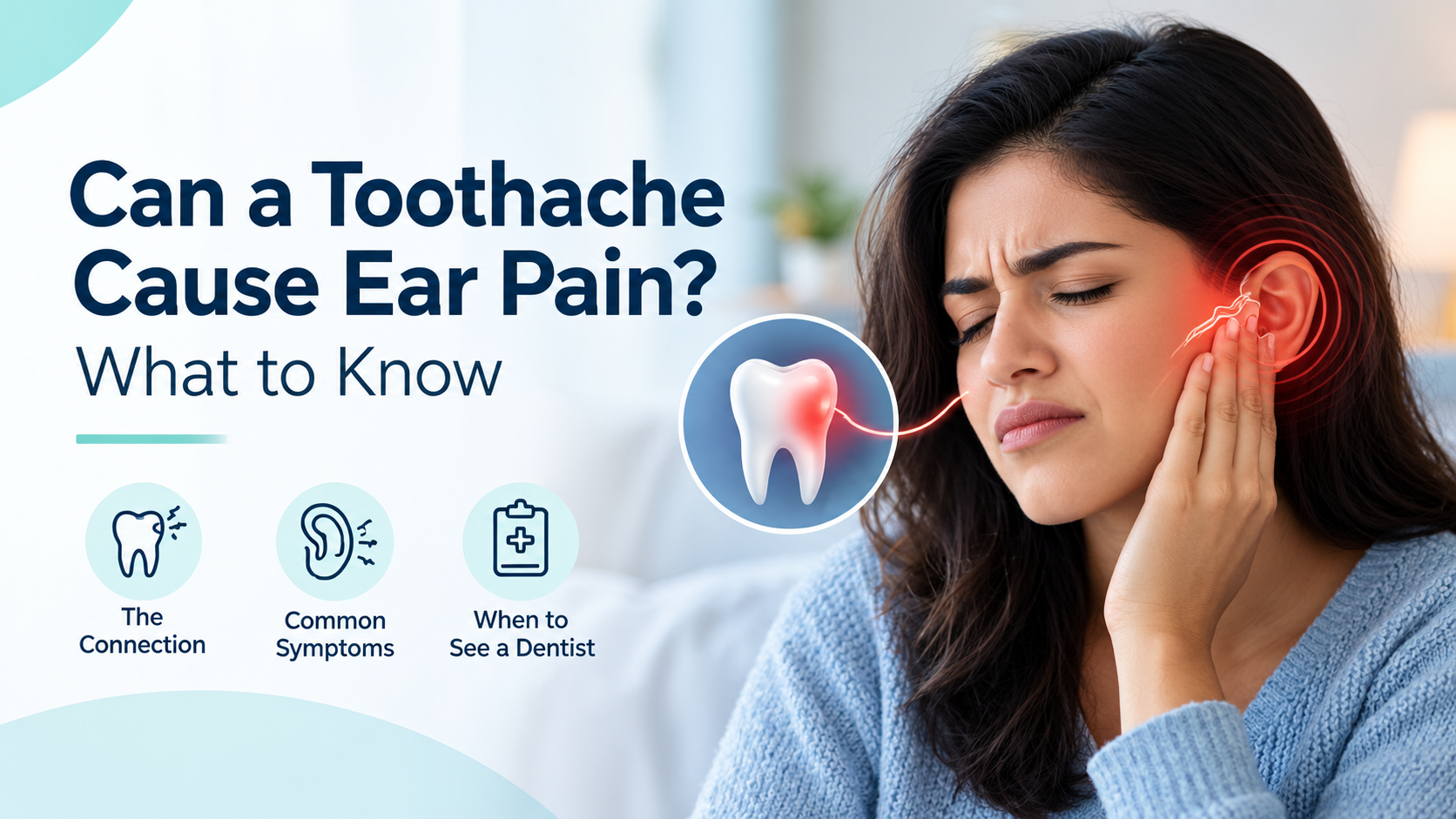
A toothache can affect much more than just your teeth. In many cases, pain from a damaged or infected tooth can spread to nearby areas, including the jaw, face, and even the ear. Many people ask, can tooth pain cause ear pain? The answer is yes. Because the teeth and ears share nerve pathways, pain can travel from one area to another, making it difficult to identify the real source of discomfort.
If you are experiencing persistent dental pain along with ear discomfort, it is important to seek professional dental care. Early diagnosis and treatment can prevent complications and provide lasting relief.
Can Tooth Pain Cause Ear Pain?
Yes, the nerves that supply the teeth are closely connected to the jaw and ears. When a tooth becomes infected, cracked, or severely decayed, the pain can radiate to the ear.
Many people mistake this discomfort for an ear infection when the real problem is inside the mouth. A proper dental examination can determine whether the pain is dental in origin.
Why Does Tooth Pain Spread to the Ear?
The teeth, jaw, and ears share the trigeminal nerve, which carries pain signals to the brain. When this nerve becomes irritated because of a dental problem, pain may spread beyond the affected tooth.
Common reasons include:
- Deep tooth decay
- Dental abscess
- Gum infection
- Cracked tooth
- Impacted wisdom teeth
- Jaw joint (TMJ) problems
This shared nerve pathway explains why tooth and ear pain often occur together.
Common Dental Problems That Cause Ear Pain
Tooth Decay
A cavity that reaches the inner part of the tooth can irritate the nerve and create pain that spreads toward the ear.
Dental Abscess
A tooth abscess is one of the most painful dental conditions. It develops when bacteria infect the inside of the tooth or gums. This infection often causes toothache and ear pain, along with swelling and sensitivity.
Cracked Tooth
A cracked tooth exposes the sensitive inner tissues, causing pain whenever you chew or bite. In some cases, this discomfort travels toward the ear.
Gum Disease
Advanced gum disease causes inflammation around the teeth and jaw, which may result in ear and tooth pain occurring together.
Impacted Wisdom Teeth
Wisdom teeth that do not erupt properly can press against surrounding tissues and nerves, leading to pain that extends into the jaw and ear.
Symptoms to Watch For
These symptoms may suggest a dental cause:
- Toothache while eating
- Swollen or bleeding gums
- Jaw pain
- Ear discomfort on one side
- Sensitivity to hot or cold foods
- Bad breath
- Difficulty opening the mouth
- Facial swelling
- Headache
- Fever in severe infections
These symptoms should never be ignored, especially if they continue for more than a day.
How Do You Know the Pain Is Coming from Your Tooth?
It is not always easy to tell whether the pain is caused by your ear or your tooth.
Your pain is more likely to be dental if:
- One tooth feels especially sensitive.
- Pain increases while chewing.
- Your gums are swollen.
- You notice a cavity or broken tooth.
- Cold or hot drinks make the pain worse.
Can Wisdom Teeth Cause Ear Pain?
Yes. Impacted wisdom teeth are one of the most common reasons patients experience tooth and ear pain.
When wisdom teeth do not have enough room to erupt, they push against nearby teeth and place pressure on surrounding nerves. This often causes jaw pain, headaches, and ear discomfort.
Some patients also experience toothache and ear pain when bacteria become trapped around partially erupted wisdom teeth, leading to infection.
Treatment Options
Treatment depends on the underlying dental condition.
Dental Fillings
If the problem is caused by a cavity, your dentist may recommend a dental filling. Treating decay early prevents infection from reaching the tooth nerve and reduces the chance of pain spreading to the ear.
Root Canal Treatment
If the tooth nerve has become infected, a root canal removes the infection while preserving the natural tooth.
Tooth Extraction
A severely damaged or infected tooth that cannot be saved may need to be removed.
Wisdom Tooth Removal
Impacted wisdom teeth often require surgical extraction to eliminate pain and prevent future problems.
Home Care Tips
While waiting for your dental appointment, you can reduce discomfort by:
- Taking pain relief medication as recommended.
- Rinsing your mouth with warm salt water.
- Applying a cold compress to the outside of the face.
- Avoiding very hot, cold, or sugary foods.
- Keeping the affected area clean.
These remedies provide temporary relief but do not replace professional treatment.
Preventing Tooth Pain and Ear Pain
Good oral hygiene is the best way to avoid dental problems.
Follow these simple habits:
- Brush your teeth twice daily.
- Floss every day.
- Visit your dentist every six months.
- Treat cavities early.
- Avoid excessive sugary foods.
- Do not ignore wisdom tooth pain.
These preventive measures reduce the risk of developing ear and tooth pain caused by dental infections.
Dental Implants: Restore Missing Teeth
If a damaged or infected tooth cannot be saved, replacing it is important for maintaining your oral health. Dental implants are a durable and natural-looking solution that restores chewing ability, improves appearance, and helps preserve jawbone health. If tooth extraction becomes necessary, speak with your dentist about whether dental implants are the right option for you.
Dental Fillings: Stop Cavities Early
Small cavities are much easier to treat than advanced tooth infections. A dental filling restores the damaged tooth, prevents bacteria from reaching the nerve, and helps you avoid more complex procedures in the future. Regular dental check-ups allow cavities to be detected before they cause serious pain.
When Should You Visit a Dentist?
Schedule a dental appointment immediately if you experience:
- Severe tooth pain lasting more than 24 hours
- Swelling of the face or gums
- Fever
- Difficulty swallowing
- Pus around a tooth
- Persistent ear pain with dental discomfort
- Difficulty chewing
Early treatment prevents complications and provides faster relief.
Expert Guidance for Healthy Smiles
Frequently Asked Questions
Yes. Can tooth pain cause ear pain is a common concern because dental infections and damaged teeth can send pain through shared nerve pathways to the ear.
The teeth, jaw, and ears share nerves. When a tooth becomes inflamed or infected, the pain may travel toward the ear.
Yes. A tooth infection can irritate nearby nerves and tissues, resulting in ear discomfort.
If you also have tooth sensitivity, swollen gums, pain while chewing, or a visible cavity, the source may be dental rather than an ear infection.
Yes. Impacted wisdom teeth commonly cause pain that spreads into the jaw and ear.
It can be. Both on the same side may indicate a dental abscess, gum infection, or impacted wisdom tooth.
Common causes include tooth decay, abscesses, gum disease, cracked teeth, TMJ disorders, and wisdom teeth.
Temporary relief includes pain medication, cold compresses, warm salt-water rinses, and seeing a dentist for proper treatment.
Visit a dentist if pain lasts more than a day, becomes severe, or is accompanied by swelling, fever, or difficulty eating.
Yes. Once the underlying dental issue is treated, the referred ear pain usually improves or disappears.