
Dental Implants
Replace missing teeth with strong, natural-looking dental implants. Restore your smile, improve chewing, and regain your confidence with expert dental care.
Make an Enquiry
About the Treatment
What Are Dental Implants ?
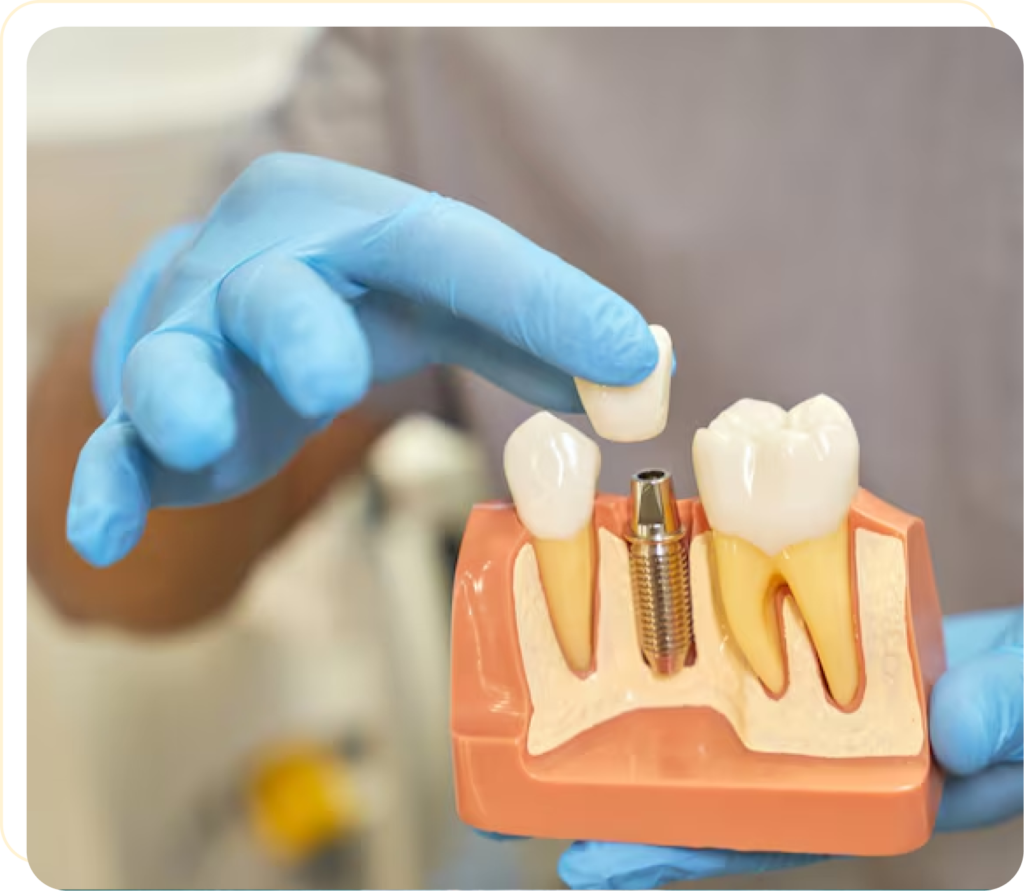
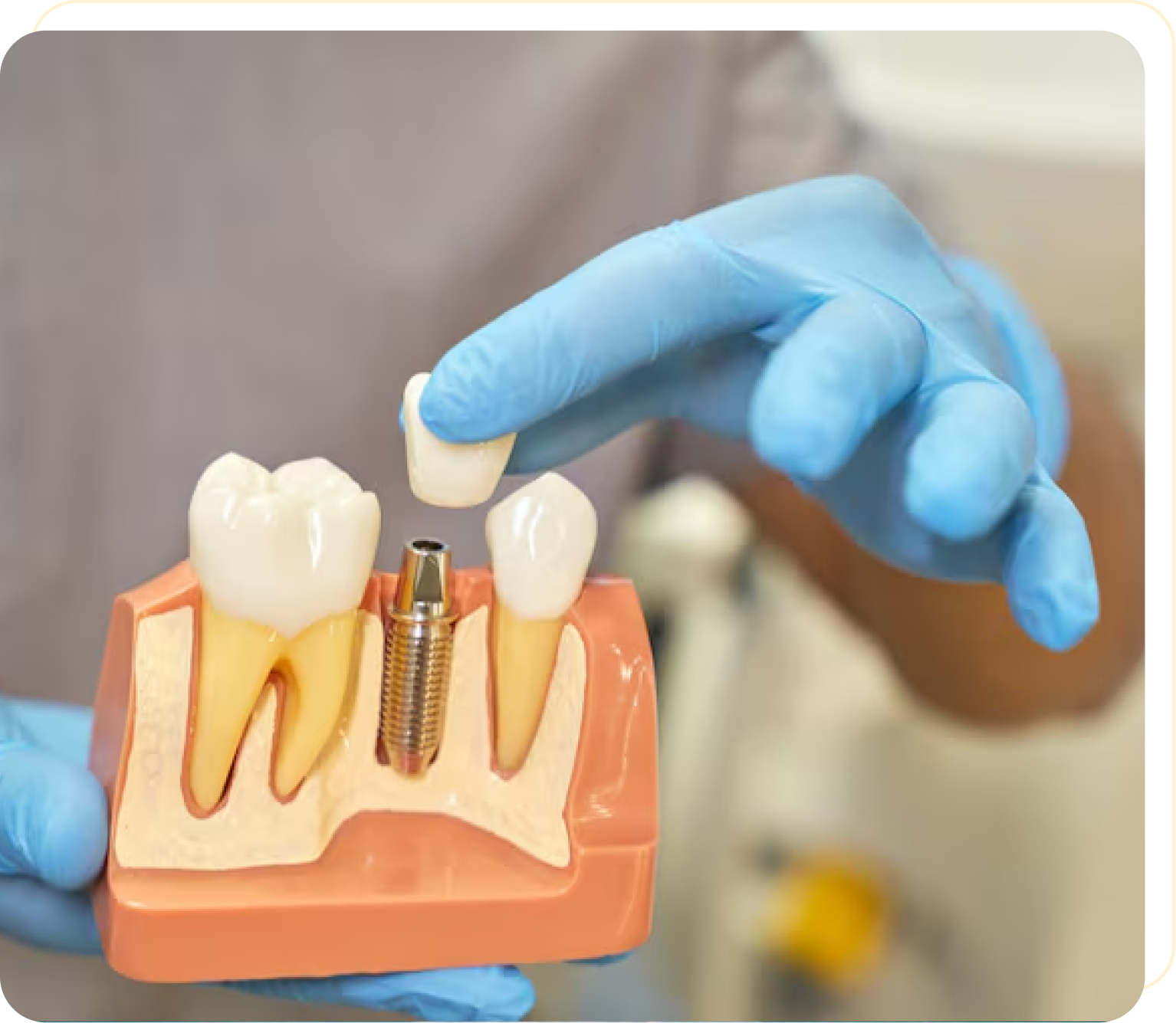
A dental implant is a small artificial tooth root, typically made from titanium or zirconia. It is surgically placed into the jawbone, where it gradually integrates with the bone. Once healed, the implant supports a dental crown that looks and functions like a natural tooth.
The Dental Implant Process
How Do Dental Implants Work?
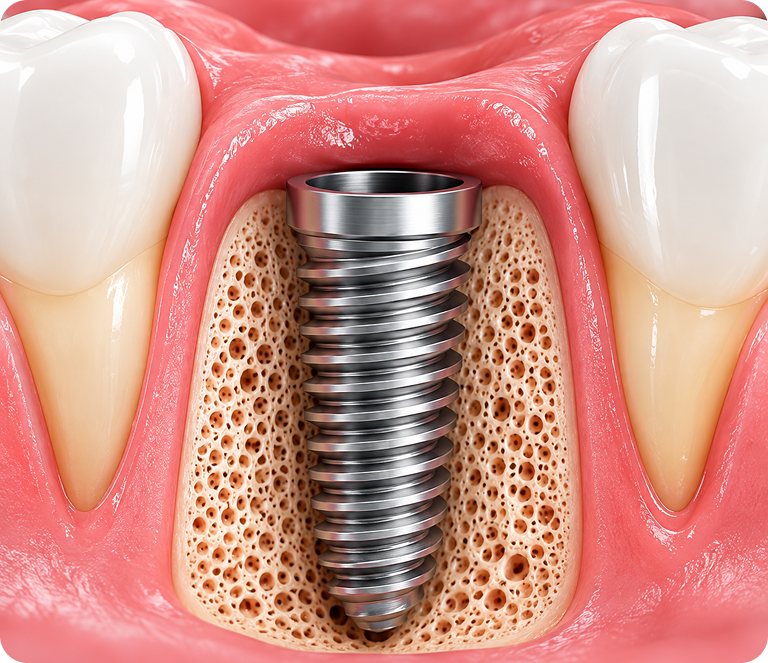
Dental implants are placed into the jawbone, where they undergo a natural healing process called osseointegration. During this process, the bone gradually grows around the implant, creating a strong and stable foundation.
Implant Placement
A titanium implant is placed into the jawbone.
Healing Process
The bone gradually grows around the implant (osseointegration).
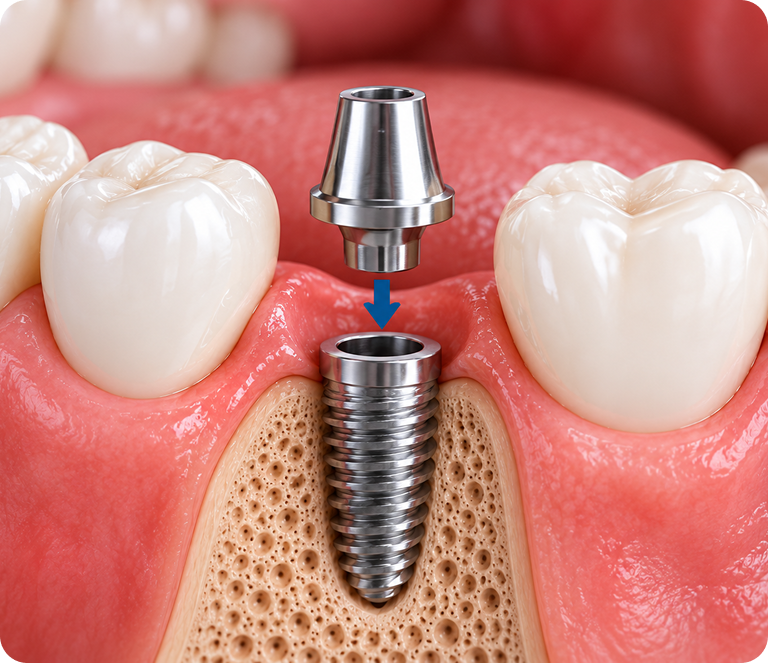
Abutment Placement
A small connector (abutment) is attached to the implant.
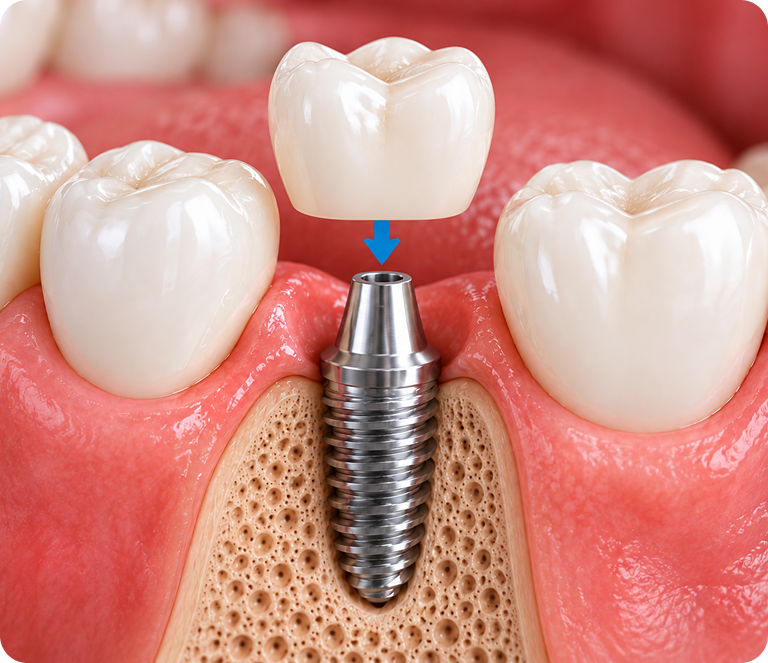
Final Crown
A custom-made crown is placed, looking and functioning like a natural tooth.
Stages of the Dental Implant
ProcessInitially, we conduct a consult, which involves assessing your jawbone using X-rays or 3D imaging. We also assess your general health. If you have a tooth with significant damage, it will need to be extracted. If your jawbone is weak or too thin, bone grafting may be necessary in advance of implant placement.The implant is placed in your jaw under anesthesia. Following that, you will undergo a healing period. The bone will integrate with the implant over a period of about 3 to 6 months. After the healing time, we place the abutment and then seat a custom-made crown
The Dental Implant Process
Types of Dental Implants
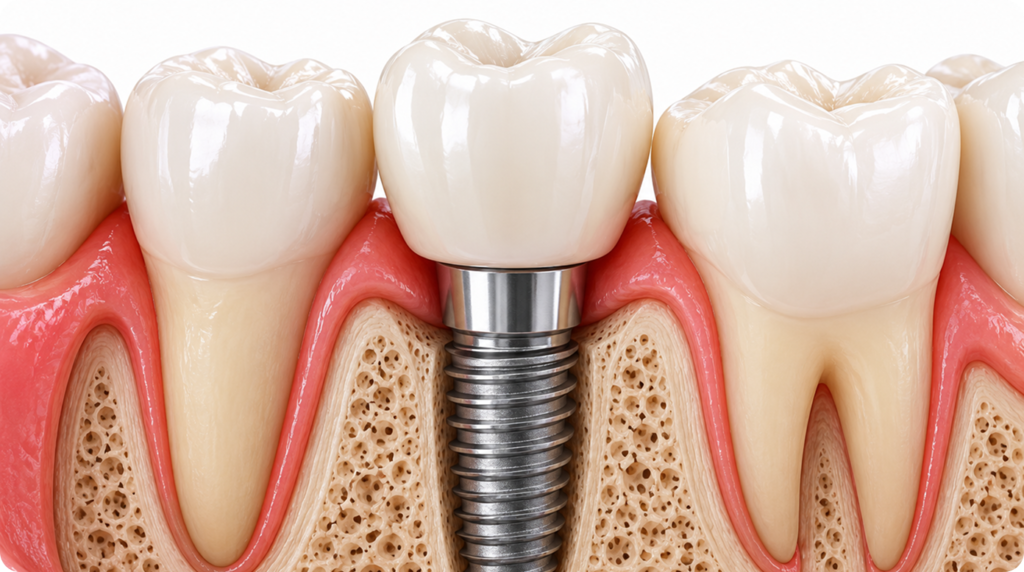
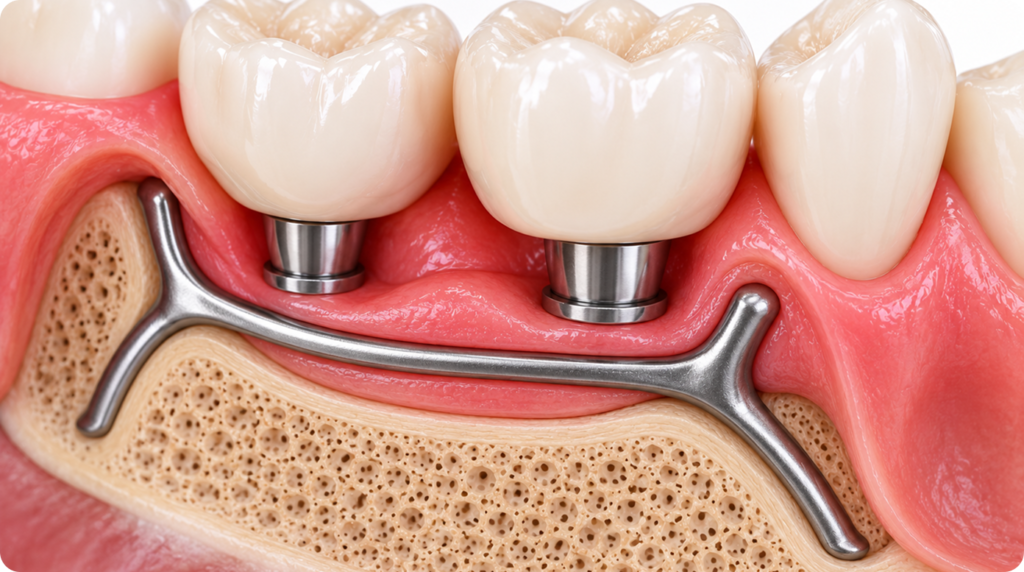
There are two main types of dental implants. An endosteal implant is placed directly into the jawbone, while a subperiosteal implant is placed under the gum but above the jawbone. A subperiosteal implant is generally considered when there is not enough bone height.
Endosteal Implant
Placed directly into the jawbone to provide a stable foundation for a replacement tooth.
Endosteal Implant
Placed directly into the jawbone to provide a stable foundation for a replacement tooth.
Different Ways to Place Implants
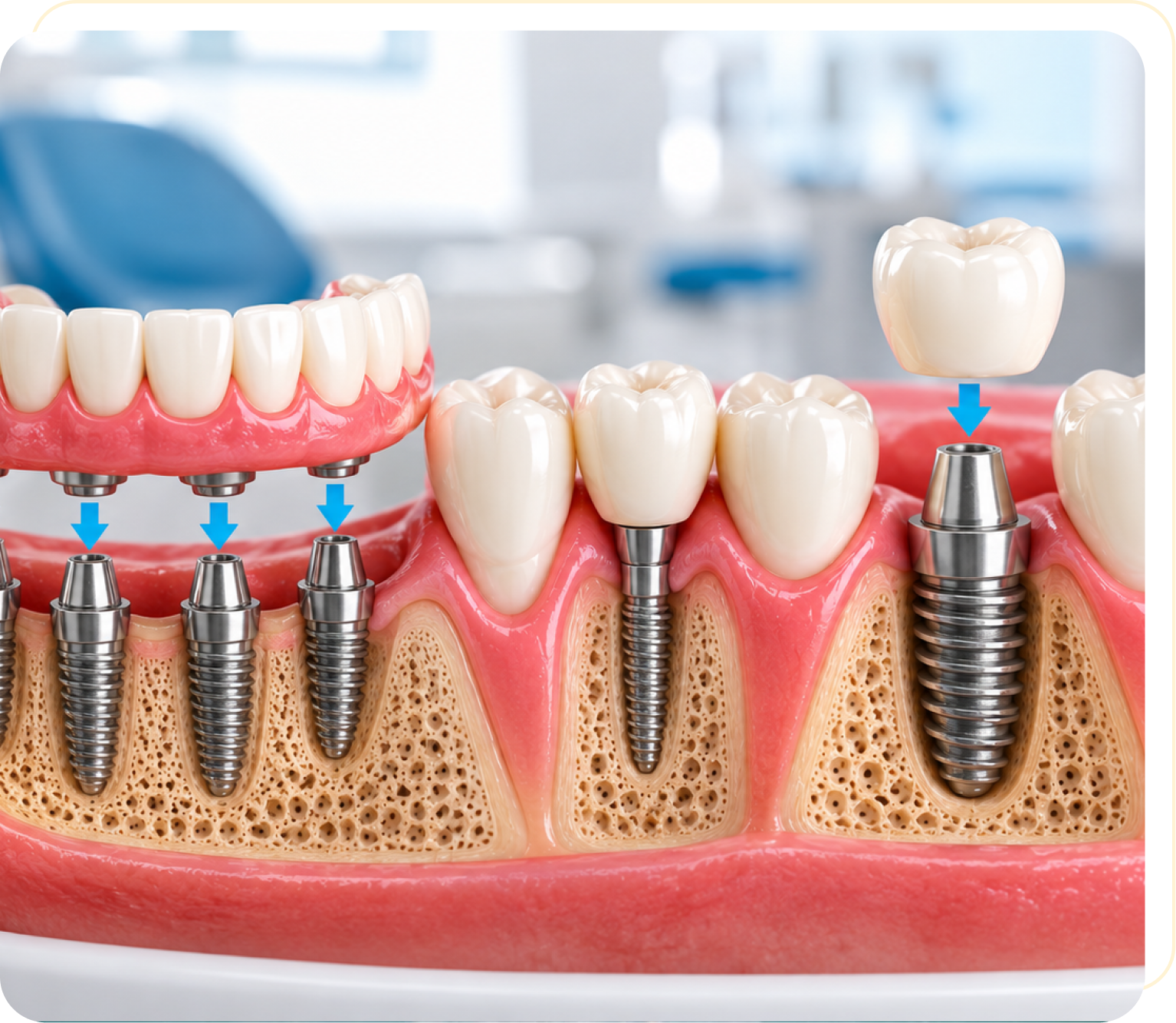
At Dantaa Dental Clinic, we have various implant techniques that we use. Conventional implants are placed in two phases, where first we place the implant, and then after healing, we place the crown. For qualifying patients, we can also do “teeth in a day,” in which the crown is placed on the same day as the implant. Mini dental implants are for those with narrow jaws or to stabilize dentures. Implants can be placed for full mouth options, for example, All-On-4 or All-On-6 which consist of either 4 or 6 implants supporting a full set of teeth
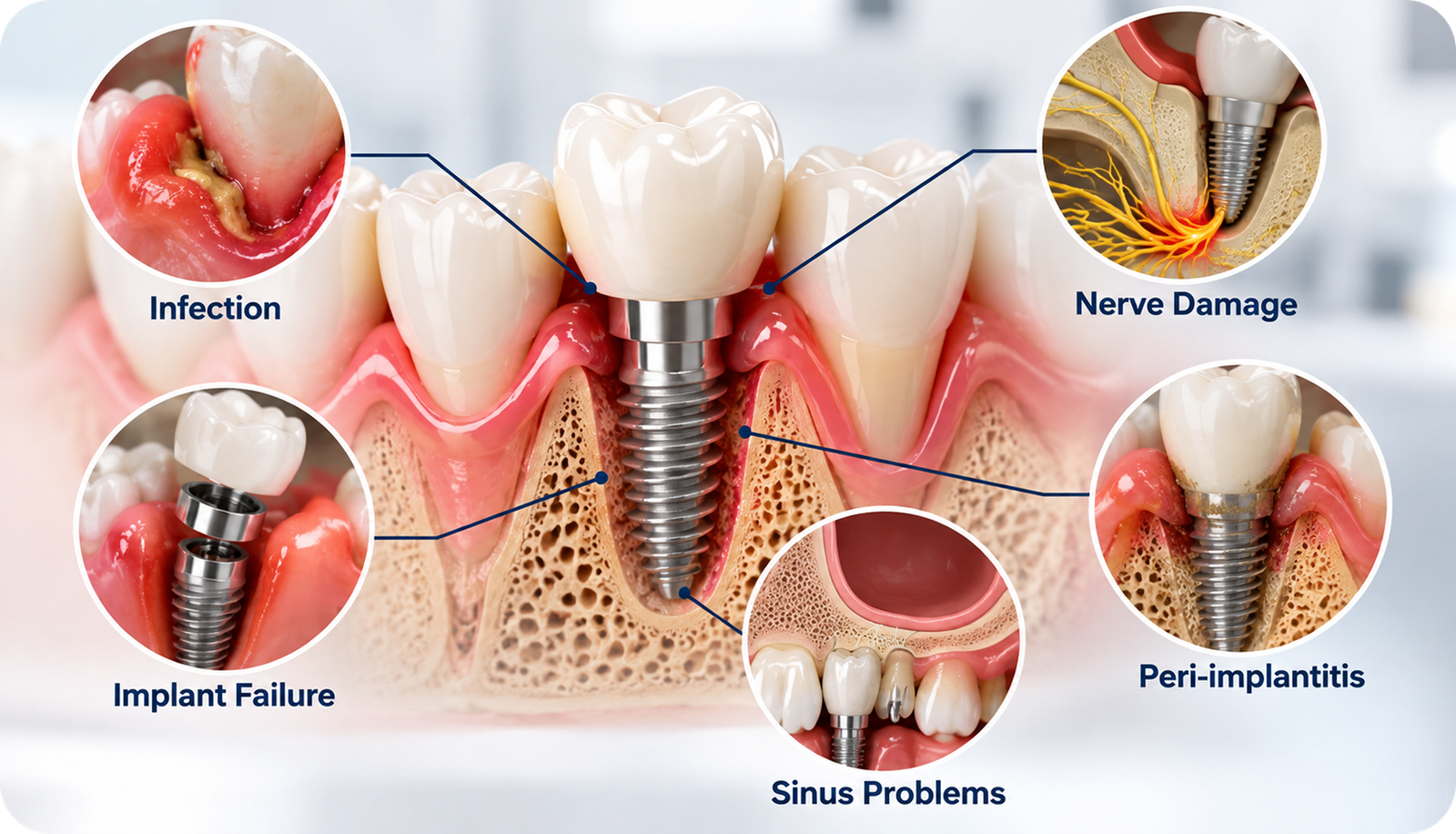
Risks and Complications
Although implants are quite safe, there are some risks. For example, an infection, nerve damage or bone may be an unsuccessful implant to integrate with bones. Sometimes transplantation in the upper jaw can cause sinus problems. If you do not maintain enough oral hygiene, you can develop peri-implantitis or inflammation around the implant.
Got Questions?
Frequently Asked
What are dental implants?
Although implants are quite safe, there are some risks. For example, an infection, nerve damage or bone may be an unsuccessful implant to integrate with bones. Sometimes transplantation in the upper jaw can cause sinus problems. If you do not maintain enough oral hygiene, you can develop peri-implantitis or inflammation around the implant.
Who can get dental implants?
Although implants are quite safe, there are some risks. For example, an infection, nerve damage or bone may be an unsuccessful implant to integrate with bones. Sometimes transplantation in the upper jaw can cause sinus problems. If you do not maintain enough oral hygiene, you can develop peri-implantitis or inflammation around the implant.
How long does the dental implant process take?
Although implants are quite safe, there are some risks. For example, an infection, nerve damage or bone may be an unsuccessful implant to integrate with bones. Sometimes transplantation in the upper jaw can cause sinus problems. If you do not maintain enough oral hygiene, you can develop peri-implantitis or inflammation around the implant.
Are dental implants painful?
Although implants are quite safe, there are some risks. For example, an infection, nerve damage or bone may be an unsuccessful implant to integrate with bones. Sometimes transplantation in the upper jaw can cause sinus problems. If you do not maintain enough oral hygiene, you can develop peri-implantitis or inflammation around the implant.
How long do dental implants last?
Although implants are quite safe, there are some risks. For example, an infection, nerve damage or bone may be an unsuccessful implant to integrate with bones. Sometimes transplantation in the upper jaw can cause sinus problems. If you do not maintain enough oral hygiene, you can develop peri-implantitis or inflammation around the implant.
Do dental implants look natural?
Although implants are quite safe, there are some risks. For example, an infection, nerve damage or bone may be an unsuccessful implant to integrate with bones. Sometimes transplantation in the upper jaw can cause sinus problems. If you do not maintain enough oral hygiene, you can develop peri-implantitis or inflammation around the implant.

Take the First Step
Ready for Your Perfect Smile?
Book your free consultation today. Our orthodontic specialist will assess your case with no obligation.